If you have ever stood in a dispensary aisle staring at a vape cartridge next to a jar of flower, you already know the question is not simple. Weed vape vs smoking is one of the most searched cannabis topics for a reason. Both get you to the same place eventually: a high, but the road there looks very different for your lungs, your wallet, and even how strong the effects feel.
How Smoking Weed Works
Smoking cannabis means lighting flower on fire, whether in a joint, blunt, bong, or pipe, and inhaling the smoke that combustion produces. Combustion happens at temperatures well above 450°C, and at that heat, plant material does not just release cannabinoids like THC and CBD. It also breaks down into tar, carbon monoxide, benzene, and dozens of other byproducts, many of which are the same compounds found in tobacco smoke.
This is the core issue with smoking. You are not just inhaling the cannabinoids you want. You are inhaling everything that burning plant matter creates along the way.
How Vaping Weed Works
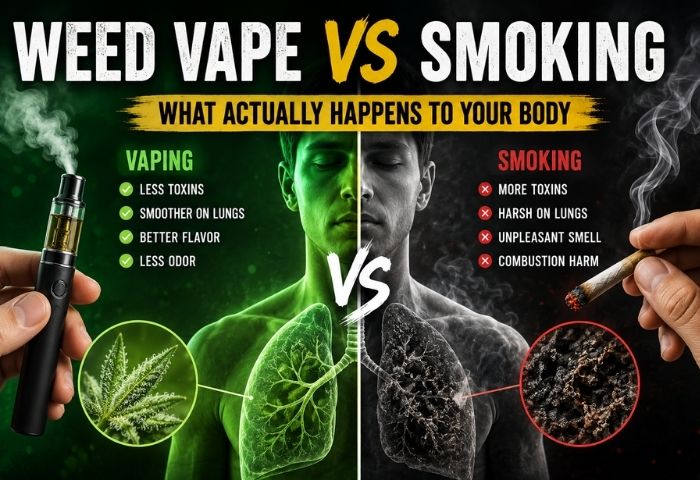
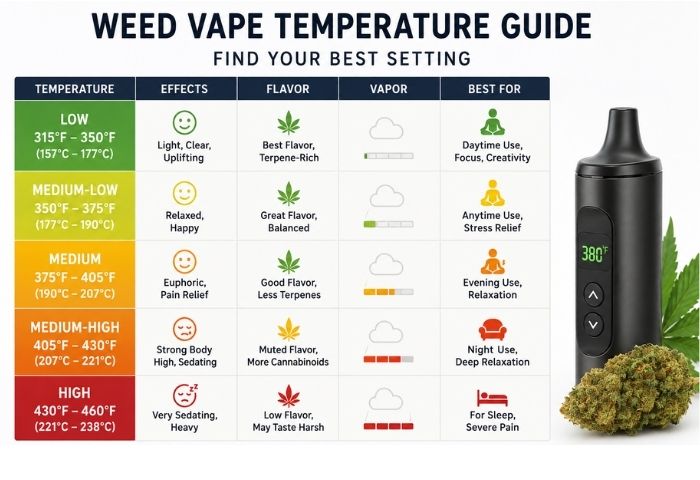
Vaping avoids combustion entirely. A vape device heats cannabis oil, distillate, live resin, or dry flower to a temperature high enough to release cannabinoids and terpenes as vapor, but low enough that the material never actually catches fire. Most cannabis vaporizers run somewhere between 160°C and 230°C. Learn more about Weed Vape Temperature adjustments
Because there is no flame, vaping produces far less tar and none of the carbon monoxide that smoking does. This is the main reason vaping earned its reputation as the “cleaner” option, though as you will see below, cleaner does not automatically mean risk-free.
Health Comparison: Lungs, Throat, and Everyday Symptoms
This is where most people’s decision actually gets made. Here is what current research points to.
Smoking is associated with chronic cough, phlegm production, throat irritation, and bronchitis-like symptoms, especially with regular long-term use. These effects mirror what happens with tobacco smoking, since cannabis smoke and tobacco smoke share many of the same irritant compounds. Some research also links heavy smoking to a modestly elevated cancer risk, though the evidence here is still considered inconclusive by public health researchers.
Vaping tends to be gentler on the throat and airways in the short term. People who switch from smoking to vaping often report less coughing and chest tightness within weeks. That said, vaping is not risk-free. Because vape oil is a manufactured product, its safety depends heavily on how it was made, what cutting agents or additives were used, and whether it was tested in a proper lab.
The honest takeaway from the research: smoking has a longer, more established track record of respiratory harm, while vaping’s risks are less about the cannabinoids themselves and more about product quality and what else might be mixed into the oil.
THC Potency and How Strong the High Feels
One thing that surprises a lot of people is how different the potency actually is. The Weed Vape flower tops out around 20 to 25 percent THC. Vape oils, distillates, and concentrates can reach 80 to 95 percent THC. That is a massive gap.
Because vaporized oil is also absorbed more efficiently by the lungs, and less THC is lost to heat breakdown compared to combustion, vaping tends to deliver a stronger, faster hit per puff. This matters most for people who are new to cannabis or sensitive to THC, since it is much easier to overshoot your comfort zone with a vape pen than with a joint.
EVALI: The Outbreak That Changed the Conversation
In 2019, the CDC identified a cluster of severe lung injuries and deaths tied to vaping, a condition that came to be known as EVALI, or e-cigarette or vaping use-associated lung injury. This outbreak understandably scared a lot of people away from vaping.
The important detail that often gets lost is what actually caused it. Investigators traced EVALI almost entirely to vitamin E acetate, a thickening agent that illicit and black market THC cartridges used to cut and stretch their oil. Regulated, lab-tested products sold through licensed dispensaries were not the source of the outbreak. This is why buying from a legal, tested source rather than an unregulated street cart remains one of the single biggest safety factors in vaping today.
Do Weed Vapes Cause Popcorn Lung?
Now for the question that brought a lot of readers here. Popcorn lung, medically known as bronchiolitis obliterans, is a serious and irreversible scarring of the small airways. The name comes from an outbreak among workers at a microwave popcorn factory in the early 2000s who developed the condition after years of inhaling diacetyl, a chemical used to create artificial butter flavor.
Here is the key fact that clears up most of the confusion: diacetyl is the culprit, not cannabis and not vaping itself. A cannabis vape only carries this risk if its oil contains diacetyl or similar flavoring chemicals, which shows up almost exclusively in cheap, flavored, or unregulated products.
A few points worth knowing:
Popcorn lung has never been documented in a vaper from typical consumer use, cannabis or nicotine. There is no confirmed case linking vape use to the condition.
Diacetyl exposure from cigarette smoke is actually far higher than anything found in tested vape products, yet popcorn lung has not been observed in smokers either, since the condition is tied to occupational-level industrial exposure, not the trace amounts found in consumer products.
Most licensed cannabis producers do not use diacetyl at all, and many markets have restricted or banned it in vape products.
The real risk factor is buying unregulated, untested cartridges, whether that is for diacetyl, vitamin E acetate, or other cutting agents that have no business being in something you inhale.
So the short answer: a lab-tested weed vape from a licensed source is extremely unlikely to cause popcorn lung. The danger comes from what gets added to cheap, unregulated oil, not from cannabis vaping as a category.
Cost, Discretion, and Everyday Convenience
Health aside, a few practical differences tend to sway people’s final decision.
Vaping is generally more discreet. Vapor dissipates faster than smoke and carries less lingering odor, which matters if you live with roommates, family, or in an apartment building.
Smoking is usually cheaper up front. Flower costs less per gram than concentrate, and you do not need to buy a device or replacement cartridges.
Vaping offers more dosage control. Many devices let you set temperature and puff size, which makes it easier to microdose or stay consistent.
Smoking preserves the full “entourage effect” some users prefer, since combusting whole flower releases the complete range of cannabinoids and terpenes in the plant, though at the cost of extra combustion byproducts.
Which One Should You Choose?
There is no universal right answer here. If lung comfort and discretion matter most to you, vaping from a licensed, lab-tested source is generally the gentler option. If you prefer the full-spectrum flavor and effect of raw flower and are not concerned about smoke exposure, smoking remains a straightforward and time-tested method.
If you are still deciding, our team at [Your Business Name] can walk you through lab results and help you pick a tested product that actually matches how you want to feel, not just what is trending.
Frequently Asked Questions
Is vaping weed actually safer than smoking it? In terms of avoiding tar and carbon monoxide from combustion, yes. But vaping introduces its own variables, mainly product quality and additives, so “safer” depends heavily on where the product came from.
Can vaping weed give you popcorn lung? Only if the oil contains diacetyl or similar flavoring chemicals, which is rare in regulated, tested products and more common in cheap or illicit cartridges. No confirmed cases have linked typical vape use to the condition.
What is the difference between EVALI and popcorn lung? EVALI is a separate, more serious lung injury outbreak from 2019 tied to vitamin E acetate in illicit THC cartridges. Popcorn lung is a distinct, chronic condition tied to diacetyl exposure. They are often confused but come from different causes.
Does vaping get you higher than smoking? Often yes, since vape oil is more potent per volume and the lungs absorb it more efficiently, so it is easy to consume more THC than intended without realizing it.
Is it safe to vape weed every day? Long-term data on daily cannabis vaping is still limited compared to smoking. If you vape regularly, sticking to lab-tested products from a licensed source significantly reduces your exposure to harmful additives