How Long Does a Weed Vape High Last?
If you have ever taken a hit from a weed vape pen and wondered exactly when the effects would kick in, or how long you

Weed vapes have become one of the most common ways people use cannabis today, mostly because they are fast, discreet, and easy to control. But a lot of first-time and even regular users still have basic questions. How long does the high actually last? Is it even legal to carry one around? What does THC percentage really mean for the experience?
This guide breaks all of that down in plain language, based on how THC actually behaves in the body and how the law currently treats these products.
Before getting into effects, it helps to know the terminology, since people use several names interchangeably.
THC vape pen is the most common term. It usually refers to the whole setup: a battery paired with a cartridge filled with THC oil.
Vape cartridge, or “cart,” is the small container that holds the actual cannabis oil. Carts screw onto a rechargeable 510-thread battery and can be swapped out once empty.
Disposable vape is an all-in-one device that already contains the battery and the oil. Once the oil runs out, the whole unit gets thrown away.
A dab pen or wax pen is a bit different. These are built for concentrates like wax, shatter, or live resin rather than pre-filled liquid oil, and they usually deliver a stronger, more intense hit.
So when someone asks “what are vapes with weed called,” the honest answer is that it depends on the format, but “THC vape pen” or “vape cart” covers most of what you’ll see at a dispensary.
This is where things get genuinely confusing, because the answer depends entirely on location.
There is no single federal law that makes THC vapes legal across the United States. Marijuana-derived THC products remain federally illegal, even in states that have legalized recreational or medical use. State law is what actually governs whether you can buy or carry one.
As of 2026, THC vapes are fully legal for adults 21 and older in a growing list of recreational states, including California, Colorado, Michigan, Illinois, Massachusetts, Arizona, and several others. In states with medical-only programs, such as Florida, Kentucky, and Louisiana, access is limited to registered patients with a valid medical card. A handful of states, including Idaho, Kansas, South Carolina, and Wyoming, still ban THC products outright, with no legal pathway at all.
Hemp-derived THCA vapes have existed in something of a gray area, sold legally in many states under the federal hemp definition. That loophole is expected to close under new federal rules taking effect later in 2026, so anyone relying on hemp-derived products should keep an eye on how their state responds.
The safest approach is always to check your specific state’s current cannabis laws before buying, traveling with, or using a THC vape, since crossing a state line can turn a legal product into an illegal one almost instantly.
THC percentage tells you how concentrated the oil is, and it has a direct effect on intensity.
Most dispensary carts range somewhere between 60 and 90 percent THC. Distillate, the most common and most affordable oil type, tends to sit on the higher end of that range but has less flavor. Live resin and live rosin usually carry a bit less THC but preserve more of the plant’s original terpenes, which is why they taste and smell closer to the original strain.
Higher THC percentage generally means a stronger and sometimes longer high, but it isn’t the only factor. Terpene content, individual tolerance, and how much you actually inhale all play a role in how strong the experience feels.
Vaping THC works differently than eating an edible. Because the vapor goes straight into your lungs and bloodstream, effects show up fast.
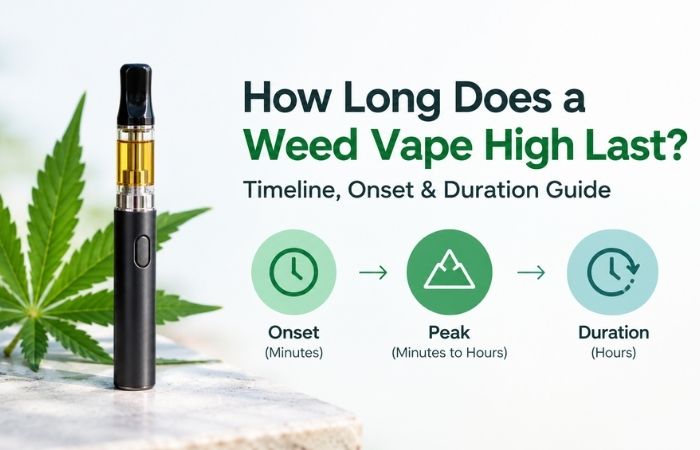
Most people start to feel something within two to ten minutes of inhaling. The high typically builds to its strongest point around the twenty to thirty minute mark, then gradually eases off from there.
Common effects during this window include a lifted or relaxed mood, altered sense of time, increased appetite, and in some cases, mild dizziness or dry mouth. Users who are new to cannabis or who take a much larger hit than they’re used to may also experience a faster heart rate or a brief wave of anxiety, which usually passes as the peak fades.
This is the question most people are really asking, and the honest answer is that it varies, but there is a solid general range.
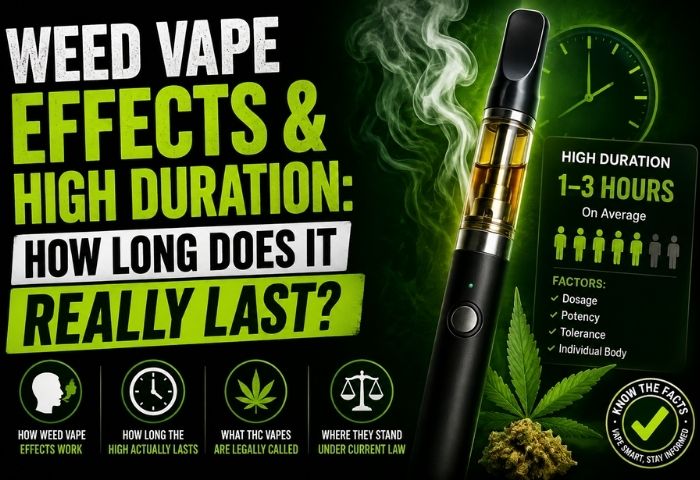
For most users, a weed vape high lasts somewhere between one and three hours from start to finish. Some people, especially those with lower tolerance or those who vape a high-potency cartridge, report effects stretching closer to four hours, with mild grogginess or relaxation lingering a bit beyond that.
Compared to smoking weed flower, the duration is fairly similar. Compared to edibles, it’s much shorter. Edibles pass through the digestive system and liver, which delays onset but stretches the high out to six hours or longer. Vaping skips that process entirely, which is exactly why the effects hit faster and fade faster too.
A few factors consistently show up as the biggest influences on duration.
THC potency matters most. A cartridge in the 80 to 90 percent range will generally produce a longer and more intense high than one closer to 50 to 60 percent.
Tolerance plays a major role as well. Regular users tend to process THC faster because their bodies have adjusted, which often shortens both the intensity and the length of the high compared to someone using cannabis for the first time.
Body chemistry, including metabolism, weight, and overall health, changes how quickly THC gets processed and cleared.
Strain type can shift the feel of the high even when duration stays similar. Indica-leaning strains tend to produce longer-feeling body relaxation, while sativa-leaning strains often feel like they fade a bit faster since the effects are more cerebral than physical.
How much and how often you inhale in a single session obviously adds up. Taking several hits back to back stacks THC in the bloodstream faster than the body can process it, which extends both intensity and duration.
| Method | Onset | Peak | Total Duration |
|---|---|---|---|
| Vaping | 2–10 minutes | 20–30 minutes | 1–3 hours |
| Smoking flower | 2–10 minutes | 20–30 minutes | 1–3 hours |
| Edibles | 45–120 minutes | 2–4 hours | 4–8+ hours |
Vaping sits in a sweet spot for a lot of users: fast enough to gauge how you’re feeling in real time, but short enough that it doesn’t take over your whole day.
Because vape cartridges are often far more concentrated than flower, it’s easy to take in more THC than intended if you don’t pace yourself. Waiting ten to fifteen minutes between hits gives the first dose time to fully register before deciding whether you need more. This is especially useful for anyone trying a new cartridge or a higher-potency product for the first time.
If you’re shopping for cartridges, pens, or wholesale vape products, Bang Vape Trade carries a range of options for buyers who want reliable, quality-checked devices rather than guessing at what they’re picking up. Knowing your product’s THC content ahead of time makes it much easier to predict how strong and how long the high will actually be.
Does a weed vape high feel different from smoking?
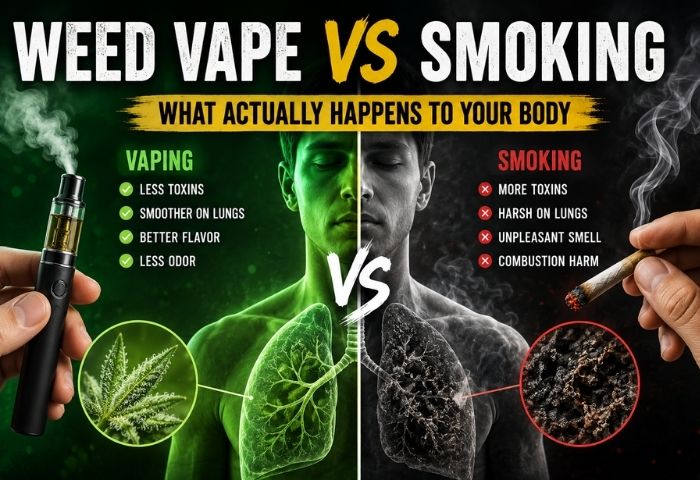
Not dramatically. Onset, peak, and duration are all fairly similar. Vaping tends to feel a bit smoother on the throat and lungs since there’s no combustion involved.
Can the effects of a weed vape carry into the next day?
It’s uncommon. Because vape highs clear the body faster than edibles, a true next-day effect is rare, though a very large session close to bedtime can leave mild grogginess the next morning.
Is a higher THC percentage always a stronger high?
Generally yes, but terpene content, tolerance, and dose all factor in too. Two cartridges with the same THC percentage can still feel different depending on their terpene profile.
Are THC vapes legal everywhere cannabis is legal?
Not necessarily. Some states allow flower but restrict certain vape formats, and hemp-derived THC products face their own separate set of rules that are still evolving in 2026.

If you have ever taken a hit from a weed vape pen and wondered exactly when the effects would kick in, or how long you
If you’re switching from smoking to vaping, or you’re just curious about discretion, one question comes up constantly. Do weed vapes smell like weed? The
Weed vapes have become one of the most common ways people use cannabis today, mostly because they are fast, discreet, and easy to control. But
If you have ever stood in a dispensary aisle staring at a vape cartridge next to a jar of flower, you already know the question
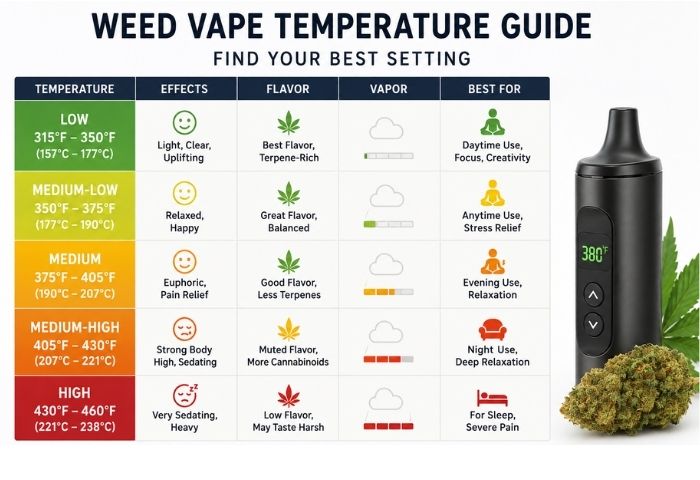
Temperature is the single biggest factor that decides what your vaping session actually feels like. Two people can load the same flower into the exact
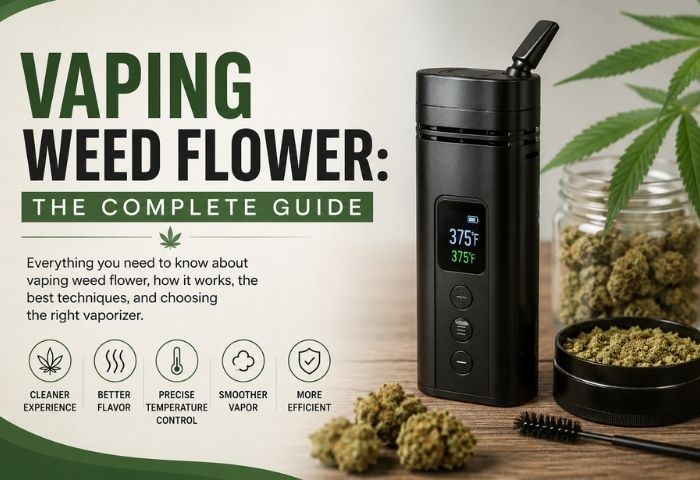
If you’ve only ever smoked cannabis, switching to a vape for weed flower can feel like a different experience entirely. There’s no lighter, no smoke,
This website contains products related to vaping and nicotine. You must be 18 years or older to enter this site.